
Pastries
Cornetti vs. Croissants: What's the Difference and Which Dough Should You Make?
October 06, 2026
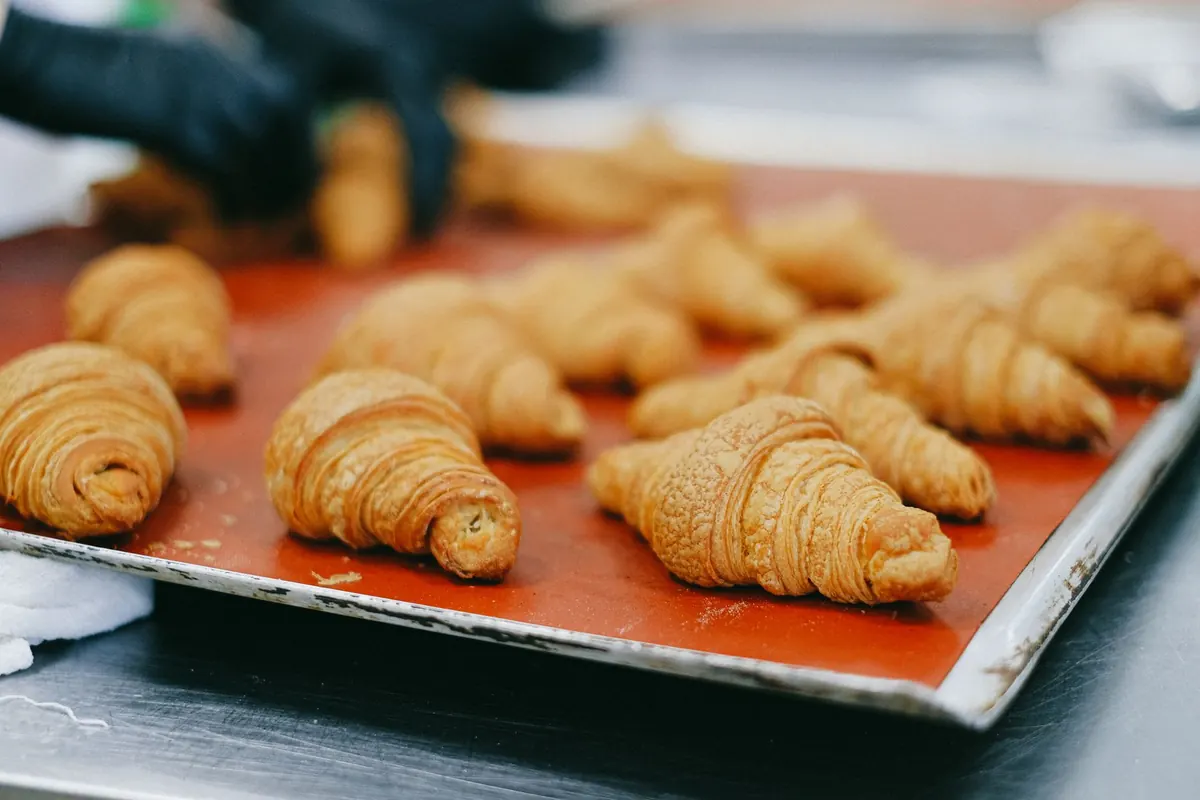
A bar in Rome at seven in the morning smells of espresso and warm butter. A bakery in Paris at the same hour smells of the same two things, and yet the pastry in the paper bag is a different creature. Both are crescent-shaped, both are laminated, both will dust your sweater with flakes. But the dough under the crust behaves differently, the crumb tears differently, and the baker's intentions are not quite the same. Once you see where the two paths split, choosing which one to make on a Sunday morning stops being a coin toss.
Cornetti and croissants share an ancestor
Neither pastry was invented in the country that now claims it most loudly. The crescent-shaped kipferl came out of Austrian baking, travelled to France in the nineteenth century and picked up lamination along the way; the tale about Marie Antoinette carrying it to Paris is repeated everywhere and documented nowhere. Italy took the idea and bent it toward its own tastes: a softer crumb, a little sugar, eggs in the dough, and a shape generous enough to be split and filled.
The naming is gloriously messy. Order a cornetto in Rome, a brioche in Naples, or something closer to a sweet bun in parts of Sicily, and you will get three different pastries that all answer to roughly the same idea. For a baker, that regional noise is a distraction. What actually separates the two families is the dough, the shaping, and how long the finished thing has to survive before someone eats it.
Where the real difference lives: the dough
Strip away the shape and you find two different formulas with two different jobs. A croissant dough is built to shatter. A cornetto dough is built to stay soft and hold a filling. Everything else follows from that.
Croissant dough
Flour, water, a splash of milk, salt, yeast and a modest amount of sugar. That is close to the whole story. The dough is lean, cool and fairly stiff, and the butter arrives later, in a single block, folded in through lamination. The stiffness matters: a firm dough rolls out thin without tearing, keeps its layers distinct and puffs into that thin-walled honeycomb. Three single turns take you to twenty-seven layers, which is plenty; more is not automatically better, especially at home.
Cornetto dough
Now add eggs, more sugar, often milk, sometimes a spoon of honey or a little soft butter worked into the base dough before the butter block goes in. The result is richer, softer and far more extensible — a light brioche that happens to be laminated. It tastes sweeter, browns faster, and behaves like a dough with opinions. Sugar and eggs tenderise gluten, so the dough is stickier, harder to roll thin and quicker to tear during the lock-in. You will also find it puffs less dramatically and more evenly, which is exactly what you want under a spoonful of custard.
The croissant is judged by its crackle. The cornetto is judged by how well it holds what you put inside it.
Shaping: the curve is not the whole story
Both pastries start as a triangle rolled from base to tip, but the proportions differ. For croissants, cut long, narrow triangles and stretch them gently before rolling; keep moderate tension so the layers stay aligned, and tuck the tip underneath so it doesn't unfurl in the oven. A classic crescent curves the ends inward, though plenty of good bakeries sell straight croissants droits and nobody complains.
Cornetti are usually cut wider and shorter, stretched a little more, and rolled a touch looser. The horns then come further round, often almost meeting, giving that plump horseshoe with a deep belly. Some bakers nick the base of the triangle or roll from a strip instead. The looser roll is deliberate: it leaves room for steam and for filling, and it produces the open, airy interior that a cornetto needs to soak up cream without collapsing.
Texture, crackle and shelf life
A good croissant is a short-lived pleasure. The shell should crack audibly when you press it, the interior should look like a torn honeycomb, and it is at its best within a few hours of leaving the oven. Wrap it in plastic and it turns leathery; microwave it and you get rubber with a soggy crust. Reheat it in a hot oven for three or four minutes and it comes back most of the way.
A cornetto is more forgiving. Softer crust, tender crumb, a little more sweetness, and a structure that tolerates sitting on a plate for a few hours — particularly if it has been brushed with a light syrup glaze or filled after baking. That durability is not an accident. It is a pastry designed to be eaten standing at a counter with a coffee in the other hand, not dissected on a plate.
Fillings change the brief
Here the two pastries genuinely diverge, and it should influence which one you make.
- Croissants suit butter, almond cream, chocolate batons, or a savoury turn with ham and cheese. They are at their best plain or lightly enriched, because the dough itself is the point.
- Cornetti suit crema pasticcera, chocolate, apricot jam, pistachio cream, ricotta, or nothing at all — the cornetto semplice that Italians dunk without ceremony. A slightly sweeter, softer dough carries these without turning cloying.
One practical note: fill after baking where you can. Injecting custard into raw dough adds moisture that fights your lamination and can leave a gummy centre.
So which dough should you make?
Be honest about your kitchen and your timetable rather than your aspirations. Both doughs want a cold environment, a rested dough and a butter block at roughly the same plasticity as the dough itself — around 16–18°C is a useful target. Beyond that, the choice usually comes down to what you want on the plate.
- Choose croissant dough if you want maximum crackle and honeycomb, you have a cool workspace, and you plan to serve within hours of baking.
- Choose cornetto dough if you want a softer pastry that takes fillings, if your kitchen runs warm and the dough fights back, or if the pastries need to survive a brunch table for a while.
- Choose a middle path for a first attempt: croissant formula with one egg and a little extra sugar. It is more forgiving than either extreme, and most home bakers settle somewhere in that territory for a year or two before picking a side.
What I would avoid is over-enriching on batch one. A dough loaded with butter in the base and a generous butter block on top is difficult to roll, tears at the edges and bakes up heavy. Start leaner than you think you should.
A first batch you can actually pull off
Whichever dough you pick, the rhythm is the same, and it rewards planning over technique.
- Mix the base dough the evening before and chill it overnight. Cold dough is cooperative dough.
- Pound the butter into an even rectangle between parchment and let it warm just enough to bend without cracking.
- Lock in the butter, then give three single turns, resting the dough in the fridge for at least thirty minutes between each and longer if the kitchen is warm.
- Roll to about 3–4 mm, cut clean triangles with a sharp knife, and shape with light tension.
- Proof at around 24–26°C until the pastry looks jiggly and the layers are visible — usually an hour and a half to two hours.
- Brush gently with egg wash, avoiding the cut edges, and bake at roughly 190–200°C until deep golden, rotating the tray once.
Keep the batch small. Six pastries teach you more than two dozen, and a failed half-kilo of dough costs you an evening rather than a week's resolve. Make croissants once for the crackle. Make cornetti once for the filling. Then make the one you actually wanted to eat at seven in the morning, and make it again next weekend.
Photo: Anna Shvets / Pexels
Related posts
More stories you’ll love reading